
What this verification route checks
Verify.ET uses the submitted Kaafi Ebirr receipt details to start a traceable verification request. The result popup shows the request status, receipt details, and repeat confirmation signals after the first run.

Receipt URL or token
Phone (optional)
Bank Verification Guide
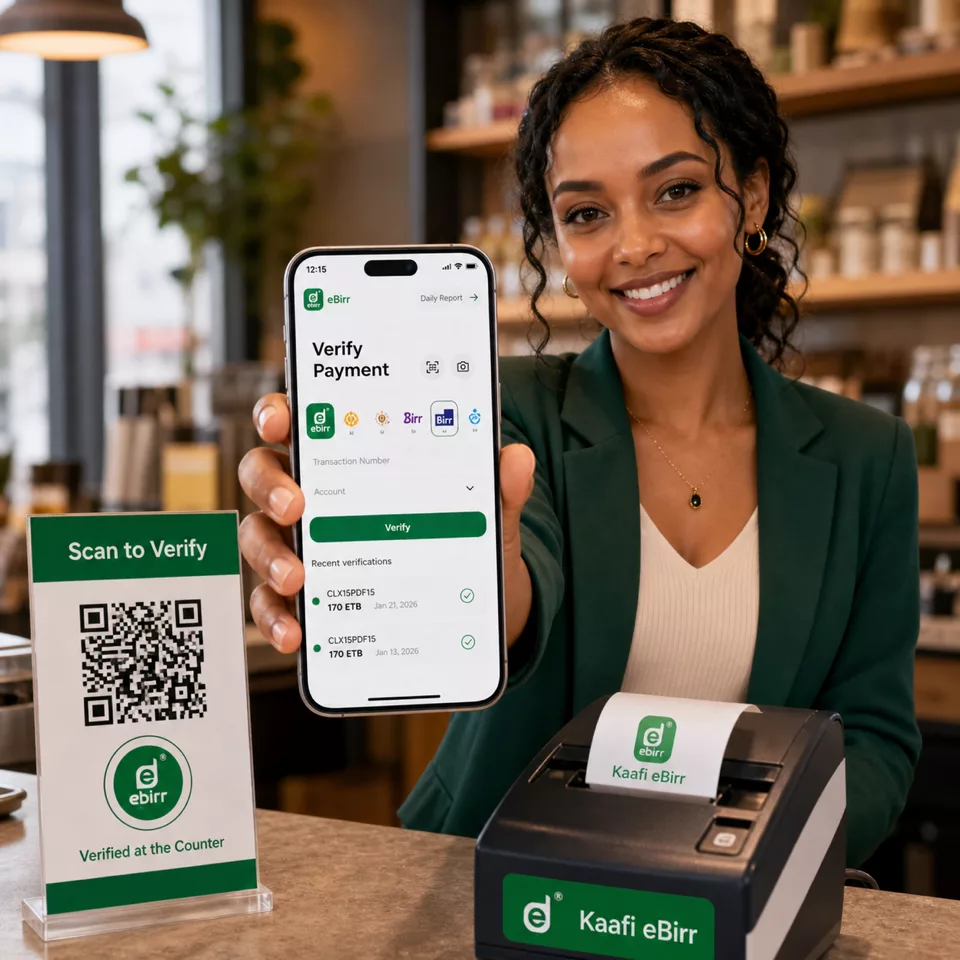
Verify Kaafi Ebirr transactions by entering the receipt URL or token from the Kaafi Ebirr payment receipt. Phone can be added as optional wallet context when your process needs it.
Kaafi Ebirr receipt URL and token verification for mobile money payment checks.
Who this route is for
Operators accepting Kaafi Ebirr mobile money who want the payment in the same verification workspace as other Ethiopian providers.
Required Fields
Step-by-step
Comparing tools? See Verify.ET vs manual checks, gateways, and open-source scripts.
Verify.ET uses the submitted Kaafi Ebirr receipt details to start a traceable verification request. The result popup shows the request status, receipt details, and repeat confirmation signals after the first run.
A successful Kaafi Ebirr check returns structured verification status plus available receipt fields such as amount, parties, reference, and timestamps when the provider data is available. Pending means the job is still processing; not found or failed means the details did not resolve to a usable receipt—re-check typing, suffixes, and provider status before releasing goods.
Phone is optional. If the receipt URL or token is valid, do not block on missing phone unless your internal policy requires it.
Kaafi Ebirr proofs should not be entered on Telebirr or MPESA forms.
Use the Kaafi Ebirr route, enter the receipt URL or token, and submit it to create a Verify.ET verification request.
No. The receipt URL or token identifies the transaction, and phone can be included as optional wallet context.
Yes. Use the bank-specific fields documented in the Verify.ET API reference for Kaafi Ebirr.

